Availability varies — call to confirm. · (855) 768-9249
Roof Nail Pop Repair in the United States
Exposed Nail Clues

United States Roof Leak Repair for Popped Nails

Heat can soften asphalt shingle tabs, while cold makes them less flexible. As temperatures change, shingles shift against fasteners and older patches can crack or loosen. A roofer checks whether seasonal movement left a nail exposed or lifted the shingle around it.

SEASONAL REVIEW

The visible nail is a starting clue because moisture can also enter around nearby roof details. Sound materials can be refastened and resealed; a split shingle or weak deck may need repair or replacement. The roofer compares roof evidence with attic or indoor moisture clues to confirm the likely entry point.

LEAK INDICATORS

Early Clues of a Roof Leak

A damp spot on a stairwell’s upper wall can send you looking for roof leak help.

A bright nail head breaks the shingle surface.

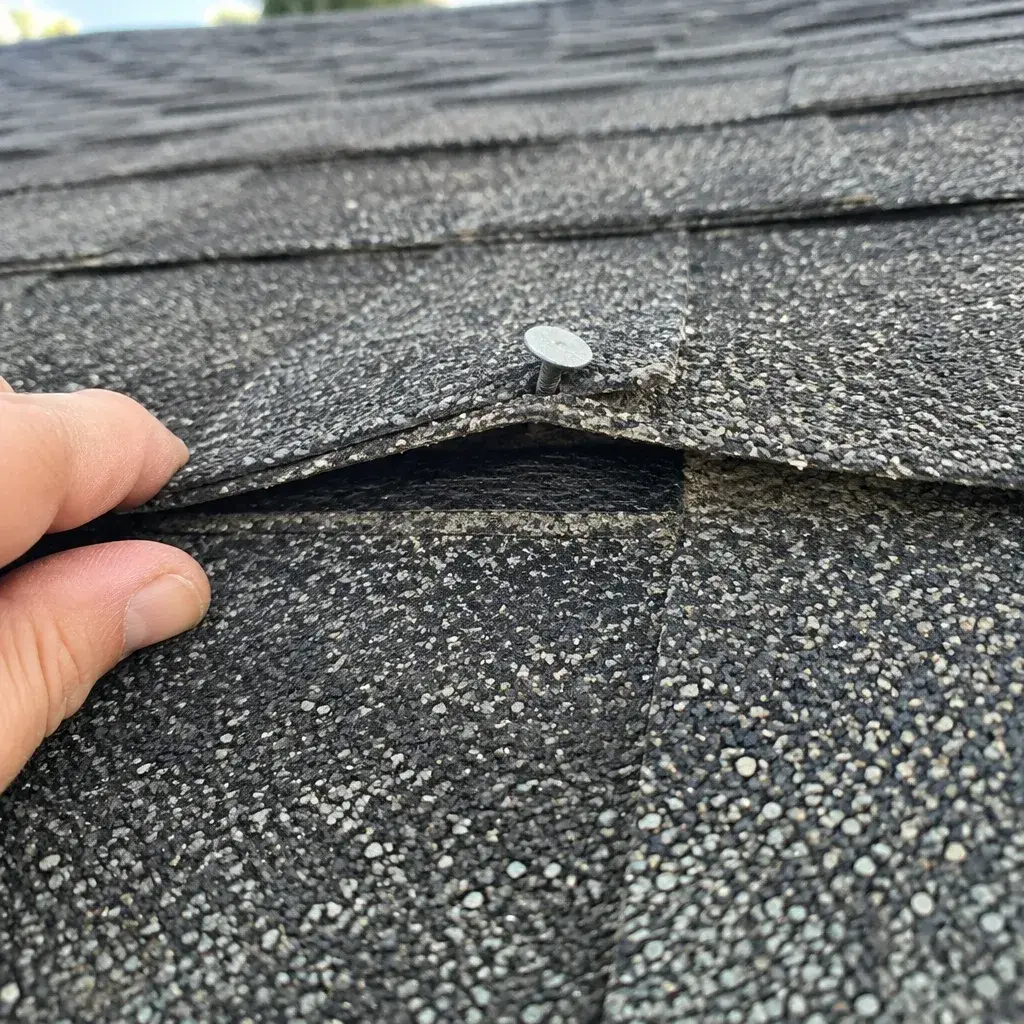
A bare nail head interrupts the shingle’s water-shedding surface, leaving the fastening point exposed to rain. Note whether it sits beside a shingle seam or an old patch, and let the roofer know what you observed. The repair may require lifting the shingle to check the hole and the wood beneath it, not merely covering the metal head.

Rust colored marks trail below an attic fastener.

A rusty streak beneath a fastener in an attic can indicate repeated dampness around that penetration, though rust by itself does not confirm the leak source. If you can see it from a stable spot, photograph the area without disturbing nearby materials. The roofer can check the fastener and surrounding deck for damage before choosing a repair.

Shingle edges sit unevenly around one fastening point.

A shingle that sits unevenly around the fastener can signal that its hold has loosened. Either condition can leave the fastener open to rain. Note its position from a safe vantage and have a roofer check the surrounding shingle and deck before deciding whether the fastener or nearby material needs repair.

A cracked patch leaves a gap beside the nail.

A sealant spot that has cracked or pulled away no longer covers the nail area continuously. Shingle movement can strain an old patch, while a lifted fastener may also disturb it. The roofer needs to check what lies underneath; a fresh surface layer alone may not address a loose nail or damaged shingle.

Damp insulation gathers near roof framing after rain.

Damp insulation or water on attic framing can narrow the area to inspect, but moisture may have traveled before reaching that point. If the attic is safely accessible, note where you see dampness without touching wiring or moving insulation. A dry attic during one visit does not show whether moisture appeared during earlier rain.

Why Roof Leaks Return

Roof construction and weather vary across the country, so nail movement does not point to one regional cause. The site has local pages for Strawberry Mansion and North Philadelphia West; in other areas, the pros we connect you with use the same referral to respond to service requests.

Prior repairs can also change what is visible around a suspected nail. Those details affect where a roofer can inspect and how the suspected nail relates to the attic and ceiling evidence. A visible fastener is a useful clue, but the roof materials still need individual assessment.

A city or county page provides area-specific information, and requests from elsewhere follow the same referral route. The property’s location helps the pros we connect you with check their service area, so share its city and county before discussing a visit.

Finding the Roof Leak Entry

FASTENER HEIGHT
A raised shingle edge can indicate a nail has moved, but it does not prove that rain entered there.
ATTIC TRACE
A split sealant patch may uncover the fastener area even when the nail itself has not shifted.
TAB ALIGNMENT
Soft or crumbling deck wood may fail to grip a replacement fastener securely.
PATCH EDGE
If the shingle has torn, sealing the nail cannot restore the missing roof coverage.
DECK SUPPORT
Water can travel along framing before appearing as an indoor stain.
Visit Timing
Heat can soften asphalt shingle tabs, while cold makes them less flexible. As temperatures change, shingles shift against fasteners and older patches can crack or loosen. A roofer checks whether seasonal movement left a nail exposed or lifted the shingle around it.
FOLLOW-UP
an estimated $90–$275

Choosing Work for the Roof’s Condition

Flashing leak. A nail issue centers on one fastener in the shingle field, while flashing protects a joint or roof penetration. Water near either spot can resemble the other indoors, so the roofer checks the specific roof materials and their condition. A popped nail is a point issue within the shingle area, often marked by a raised edge or exposed nail head. A flashing leak follows a roof joint or penetration, such as a wall or vent. The roofer checks the fastener and the formed metal edges to see which location has evidence of water entry.

Roof Leak Repair Across Different Materials

The roofer locates the suspected nail, checks whether the shingle has lifted or split, and examines the deck for sound wood or moisture damage. Attic evidence and indoor marks help test whether that fastener fits the leak path. After the repair, the shingle should sit flat and the fastener should no longer be exposed.

When the wood and shingle remain sound, the roofer resets or replaces the fastener and restores the shingle’s hold and weather covering. A torn shingle may need replacement; softened deck wood needs attention before a new nail can grip. The repair follows the material condition, rather than relying on a surface patch alone.

A repair can often be handled in one call if the source is clear and the affected roof section is accessible. If attic evidence shows moisture in separate areas, or the first correction does not stop water entry, arrange another assessment before considering recurring service.

ADDRESSING DAMAGE OR TRACKING WHAT CHANGES
Repair Approach Contained Roof Repair
One entry point found before broader damageInterior protection
New drips follow completed leak workFlashing condition
Water emerging across distinct roof zonesRoof opening seals and shingle layers reset

Choosing When a Roofer Should Take Over

Photograph any ceiling mark and note whether it changes during or after rain; include a picture of a visible fastener if you have one. Do not pry up a shingle or drive the nail back in, since either action can damage the shingle or leave the opening unsealed. Leave the fastening and deck inspection to a roofer.

Following Water Through Roof Layers

A leak is more than a cosmetic mark when water keeps soaking ceiling materials; wet drywall can sag and drop debris. If the surface bulges or cracks, keep household members out of that room and do not press or puncture it. Arrange a roof inspection so the popped fastener and any affected decking can be assessed before the ceiling is closed.

What Can Change a Roof Leak Repair Quote?

Ask the pros we connect you with to inspect the roof, then discuss how the affected materials and repair scope shape the estimate.The guide range reflects a roof repair approach supported by inspection findings; it does not price every possible method for addressing the same leak. The amount of repair work depends on what the inspection finds around the leak.Review pricing guide for estimate drivers, then visit Shingle Leak Repair to see how roof evidence guides a repair plan.
ROOF COMPONENTS

Safe Roof Access Before Leak Repair

Ridge Vent Leak Repair

Ridge vent repair. A roofer traces the water evidence to the ridge, inspects the vent…

Ridge Cap Leak Repair

Across the United States. A roofer checks ridge-cap overlap, fasteners, and bedding, then…

Common Leak Concerns

Leak Repair FAQs

Why might a roofing nail become visible?

A roofer follows the raised fastener under the shingle, checking whether its movement has broken the shingle surface or opened a water path. If the shingle is sound and the deck grips securely, the roofer can reset or replace the nail and restore the covering. A split shingle or weak deck may call for replacement work. From a safe vantage, note where you see a raised nail and share that location.

Can a cracked sealant patch leave a roof nail vulnerable?

A cracked patch can leave a route for rain, but the crack alone does not show whether water is getting through. A roofer checks whether the nail has lifted, whether the shingle beneath the patch is intact, and whether moisture appears below that area. Depending on those findings, the roofer may renew the seal or replace damaged material. Avoid treating a surface dab as proof that the fastener is secure.

Will a new nail hold if the roof deck is soft?

A replacement nail needs firm wood to hold. If the deck around the fastener is soft, split, or crumbling, simply driving in another nail may not keep the shingle down. A nail driven too high can leave the shingle loose even when the wood beneath is sound. If you notice a leak, share its timing and indoor location; those clues can help guide the inspection.

Can a ceiling stain identify a leaking roof nail?

No. A ceiling stain shows where moisture became visible inside, not which roof opening admitted it. An indoor stain is a reason to trace the moisture, even when the roof opening is not visible. A roofer compares roof and attic evidence with the indoor mark. You can photograph the stain and note when it appears, then share that with the roofer.

Start an Inquiry

Roof Nail Pop Repair in your home?

When you call the pros we connect you with, mention where water is showing and whether it appears during certain conditions. Check the visit charge before scheduling. Move furniture and stored items away from damp surfaces before the visit, and leave those surfaces uncovered.

Call (855) 768-9249
Confirm availability, inspection charges, and written scope
Call (855) 768-9249 Schedule Online