Roof Leak Warning Signs in the United States
Water inside a home can appear in several ways. A brown ring may follow moisture trapped above a ceiling, while a fresh drip can suggest water is still entering. Bubbling paint, a musty odor, or wet insulation may also signal a roof problem, though plumbing and condensation can look similar. Note when signs appear and which rooms are affected; the independent licensed pros we connect you with can assess the source and discuss suitable next steps.
Roof leak repair starts with the roof material and the part that may have failed. Damage around roof edges can let rain reach the layers below. This page sorts common signs by the roof areas that can produce them. When the source is unclear, a roofer can review the materials and attic evidence.
Rain can leave roofing slick, while steep pitches and hidden weak spots in an attic make climbing risky. Avoid using a ladder or stepping onto the roof to investigate. If you can safely see moisture indoors, note where it appears and whether it changes after rain. Share those observations with the pros we connect you with so they have useful context when discussing next steps.
Signs of an active roof leak needing prompt attention
Arrange prompt help if water continues to enter, reaches wiring or framing, or threatens to affect more of the building.
| What you noticed | Possible roof source | Repair urgency | Read more |
|---|---|---|---|
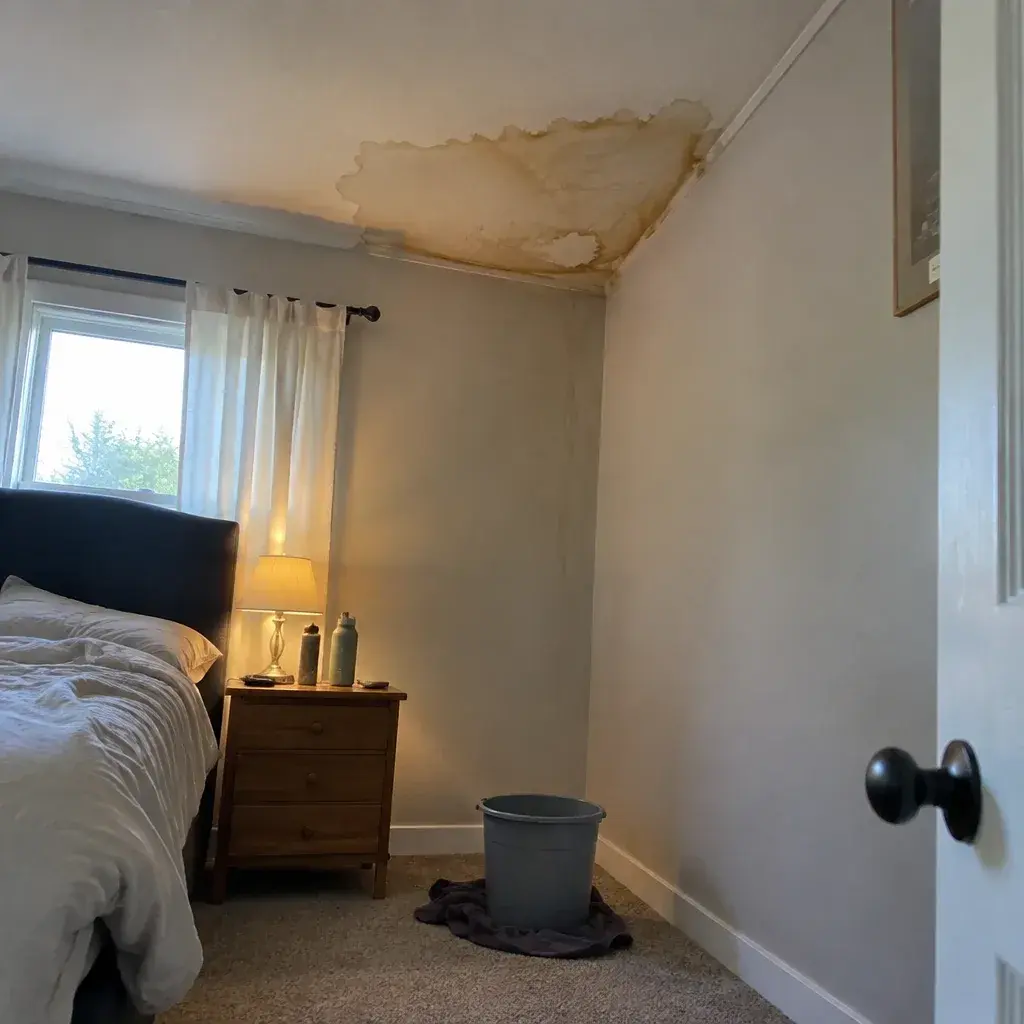
| Ceiling Water Stains A ceiling mark may be round or irregular, with a pale yellow, tan, brown, or gray area that contrasts with the surrounding paint. Its edges can fade gradually or form a distinct ring. It may appear near a ceiling corner or in the open ceiling field; paint can look bubbled or feel soft. | Check the ceiling mark first: if it is new or growing, water may still be reaching the house. Protect items below it and catch any drip indoors, then arrange a roof and attic inspection. A stain cannot identify the failed part; gaps around flashing or another roof component need to be traced before repair is chosen. | Over days of continued water entry, a ceiling stain can enlarge and soften the surrounding finish; if moisture persists, ceiling material may deteriorate further. A fresh drip or growing mark is reason to protect belongings and arrange an inspection. | Leak Inspection |
| Water Dripping Through the Ceiling A ceiling drip may appear as drops gathering at a seam or opening, with a narrow trail or uneven patch around it. The mark can range from faint yellow-brown to dark brown, with edges that look feathered or sharply outlined. Paint may look bubbled; drywall at the patch can feel soft under light touch. | A ceiling drip means moisture has found a way past the roof covering, though the entry point may be uphill from the spot indoors. Move belongings away and catch the water in a container. Contact the pros we connect you with for an inspection so they can trace the leak and repair the affected roof area. | Ongoing entry can enlarge the damaged area and leave ceiling materials damp; paint may loosen as the condition persists over days. Contain water indoors and arrange an inspection so the roofer can identify and repair the affected roof part. | Emergency Leak Protection |
| Water Leaking Through a Light Fixture Look for a clear bead or intermittent drop at the fixture rim, or a narrow wet line running from one side of its plate. The ceiling nearby may show a darker patch with an uneven, glossy edge. Paint can blister, and the surrounding ceiling board may look bowed or puckered. | Water at a ceiling light may have traveled along a rafter or wiring before reaching the opening, so the roof entry point can be some distance away. Keep the switch off and avoid touching the fixture. The pros we connect you with can inspect the roof above and nearby penetrations; have an electrician check the light before using it again. | Continued wetting can soften the ceiling around the fixture and enlarge the damaged area over the next rain. Because water has reached a light, leave it unused until it is assessed; a roofer can trace the entry and an electrician can examine the fixture. | Emergency Leak Protection |
| Wet Attic Insulation In the attic, the affected section may have a damp sheen or visible droplets, while nearby insulation looks matte. Batts can hang lower between framing; loose fill may look matted and sit unevenly. The material may feel cool and moist, and its outline can be irregular rather than a clean-edged mark. | Moisture can also leave nearby wood damp or discolored, giving another sign to check during the inspection. Note where the affected area begins and whether it is spreading, then have the pros we connect you with inspect the attic and roof to trace the water’s path. | With continued water entry, the damp area can spread and keep nearby framing wet, increasing moisture exposure over time. This can happen before a ceiling stain appears, so arrange an inspection while the attic evidence is still visible. | Leak Inspection |
| Drips from the Attic Roof Deck Beneath sloped roof boards, you may see clear drops suspended from the wood, small beads around a nail, or irregular dark patches. A thin sheen can follow a board edge, and the wood may feel clammy. The sign is above the ceiling, on the roof-facing side of the attic. | Drips on the attic-facing roof deck show that water has reached the wood above you, but the wet spot may be away from the roof entry. Note where drops form, contain them indoors, and contact the pros we connect you with for an attic and roof inspection. A brief note about nearby rafters can help describe where the moisture appears. | A drip below the roof deck shows water has crossed a roof component, but it may travel along decking or framing before falling. With each period of rain or snowmelt, the visible spot can mislead you about where water enters, while the true opening keeps admitting water until the roof component is repaired. | Emergency Leak Protection |
| Sagging Ceiling The affected area may form a wide, gentle hollow or a smaller downward pocket, outlined by flatter ceiling around it. Paint can appear rippled, discolored, or cracked along the curve. The finish may feel soft or damp under a light touch; its texture can differ from nearby drywall. | A sagging ceiling is a section that bows below the surrounding plane. With a roof leak, it may signal water collecting overhead; the visible dip may not sit below the roof entry. Track changes, protect belongings from active drips, and arrange an inspection. Keep people away from the bowed area until it has been inspected. | As moisture remains above the ceiling, the bowed finish can weaken and eventually split or drop into the room; that can happen during ongoing wet weather, with timing hard to predict. Keep people and belongings away from a deepening bulge and get the leak assessed promptly. | Emergency Leak Protection |
Signs worth booking a roof leak inspection for
A leak may be stable today; have the suspected entry checked before another storm reaches it.
| What you noticed | Possible roof source | Repair urgency | Read more |
|---|---|---|---|
| Stains on Attic Roof Decking Look for a small drip trail extending beyond the main patch. A stain can appear as a faint tan wash, a rusty brown patch, or a deeper gray mark, with a rounded or uneven edge. Nearby wood may look darker; the mark may be dry or feel damp. | Check the stained board, nearby framing, and the roof area above it for other signs of water. A soft or crumbly board can signal damage beyond the visible stain. Water may move along wood before it becomes visible, so have the attic and roof evidence traced by the pros we connect you with. | If water keeps reaching the same area during continued rain or snow, the decking may weaken and moisture can spread to nearby framing. Addressing the evidence before more wet weather gives an inspection a chance to locate the path before damage grows. | Leak Inspection |
| Musty Attic Odor The odor may have a cellar-like, woolly quality with a faint sour edge. It can be strongest near the attic hatch or over one section of a finished ceiling, and may stand out before you see any mark. There is no reliable color, shape, or texture to this sign by itself. | Start at the attic hatch and note whether the odor lingers, then look for damp insulation, darkened wood, or a ceiling mark below. A persistent musty smell can point to moisture hidden in attic or roof materials, though odor alone cannot confirm a leak. Condensation from trapped indoor moisture can damp roof sheathing even when rain is not entering. | If dampness persists, attic wood and insulation can remain affected, and damage may spread to interior finishes over time. The smell alone does not establish an active leak, but checking the attic and roof evidence can help clarify the concern; avoid climbing onto the roof. | Leak Inspection |
| Bubbling or Peeling Ceiling Paint The paint may rise into small bubbles, broad shallow ridges, or loose flakes with curled edges. Its color may match the surrounding finish or shift toward pale yellow or brown. The outline can be sharp or feathered, on the ceiling plane or near a wall edge; the surface may feel soft. | Record where paint has lifted and whether it is changing; that clue can help the pros we connect you with trace a leak. Bubbling or peeling means the ceiling finish has separated from its surface. Water may enter at failed flashing around a roof joint, then move before appearing inside. Photograph the area and arrange an inspection. | With continued rain or repeated wetting, the lifted area can spread and the ceiling material beneath may soften. The affected area can grow while moisture persists, increasing the repair needed. A discolored patch can show where water has reached the ceiling surface. | Leak Inspection |
| Daylight Visible Through the Roof Against dark attic boards, the light may show as a sharp white dot, a thin silver line, or an uneven pale shape. It can appear between rafters or across a roof board. The beam itself has no texture; the surrounding wood may feel rough, with visible grain. | A pinpoint of daylight or a narrow bright line where the roof should be closed can signal a place water may enter. From the attic, note its position and whether nearby materials look damp, then ask the pros we connect you with to inspect the area and decide what repair is needed. | Rain or snow can pass through an opening and wet roof wood or insulation. If exposure repeats, dampness may extend into finished rooms, so arrange an inspection before further weather reaches the area. | Leak Inspection |
Leak Repair FAQs
What does ceiling Water stains mean?
Check the ceiling mark first: if it is new or growing, water may still be reaching the house. Protect items below it and catch any drip indoors, then arrange a roof and attic inspection. A stain cannot identify the failed part; gaps around flashing or another roof component need to be traced before repair is chosen.
What does water Dripping through the ceiling mean?
A ceiling drip means moisture has found a way past the roof covering, though the entry point may be uphill from the spot indoors. Move belongings away and catch the water in a container. Contact the pros we connect you with for an inspection so they can trace the leak and repair the affected roof area.
What does water leaking through a Light fixture mean?
Water at a ceiling light may have traveled along a rafter or wiring before reaching the opening, so the roof entry point can be some distance away. Keep the switch off and avoid touching the fixture. The pros we connect you with can inspect the roof above and nearby penetrations; have an electrician check the light before using it again.
What does wet attic insulation mean?
Moisture can also leave nearby wood damp or discolored, giving another sign to check during the inspection. Note where the affected area begins and whether it is spreading, then have the pros we connect you with inspect the attic and roof to trace the water’s path.
What does stains on attic Roof decking mean?
Check the stained board, nearby framing, and the roof area above it for other signs of water. A soft or crumbly board can signal damage beyond the visible stain. Water may move along wood before it becomes visible, so have the attic and roof evidence traced by the pros we connect you with.
What does drips from the attic Roof deck mean?
Drips on the attic-facing roof deck show that water has reached the wood above you, but the wet spot may be away from the roof entry. Note where drops form, contain them indoors, and contact the pros we connect you with for an attic and roof inspection. A brief note about nearby rafters can help describe where the moisture appears.
What does musty attic odor mean?
Start at the attic hatch and note whether the odor lingers, then look for damp insulation, darkened wood, or a ceiling mark below. A persistent musty smell can point to moisture hidden in attic or roof materials, though odor alone cannot confirm a leak. Condensation from trapped indoor moisture can damp roof sheathing even when rain is not entering.
What does bubbling or peeling ceiling paint mean?
Record where paint has lifted and whether it is changing; that clue can help the pros we connect you with trace a leak. Bubbling or peeling means the ceiling finish has separated from its surface. Water may enter at failed flashing around a roof joint, then move before appearing inside. Photograph the area and arrange an inspection.
What does sagging ceiling mean?
A sagging ceiling is a section that bows below the surrounding plane. With a roof leak, it may signal water collecting overhead; the visible dip may not sit below the roof entry. Track changes, protect belongings from active drips, and arrange an inspection. Keep people away from the bowed area until it has been inspected.
What does daylight visible through the Roof mean?
A pinpoint of daylight or a narrow bright line where the roof should be closed can signal a place water may enter. From the attic, note its position and whether nearby materials look damp, then ask the pros we connect you with to inspect the area and decide what repair is needed.
Roof Leak Repair Signs and Next Steps
Begin by noting whether you see a ceiling stain, a damp area, or water actively dripping, and which room is affected. Take a photo of visible changes from a dry area for reference. Do not puncture a bulging ceiling to release trapped water. When you contact the pros we connect you with, ask about inspection availability and fees. Request a written account of the suspected source, repair options, and any separately charged work.
Call (855) 768-9249