Availability varies — call to confirm. · (855) 768-9249
Ridge Cap Leak Repair in the United States
Across the United States

United States Roof Leak Repair for Ridge Cap Damage

Heat can expand roof materials, while cold can make them less flexible; changing conditions may stress a weakened cap or its attachment. After rain or a thaw, note any new ceiling marks and request an inspection if they appear.

BUILDING RULES

A roofer checks ridge-cap overlap, fasteners, and bedding, then replaces cracked or missing sections and secures loose pieces. They also examine the ridge beneath for water damage and confirm whether the opening comes from the cap or an adjacent ridge vent.

INDOOR LEAK CLUES

Checking for Leaks from Indoors

Moisture darkening trim beneath the roofline may prompt you to ask about a possible leak.

A cap edge casts a thin shadow above the roofline.

A cap that sits higher than the pieces beside it may have lost its hold or support. Rain can then work beneath its edge, and movement may worsen with exposure. Record where the raised section appears from the ground and ask for an inspection, especially if indoor dampness follows.

A hairline fracture interrupts the cap surface.

A split through a cap interrupts the protective surface at the roof peak. Even a narrow break may let water reach material underneath, and further movement can enlarge it. Note whether the crack crosses one piece or continues along the ridge so the roofer can assess its extent.

One cap segment leaves a notch along the roof peak.

A gap where a cap piece should be leaves the ridge without its usual cover. Rain can reach the layers below, and the opening may expose more of the seam as conditions change. Arrange an inspection soon, particularly if you notice fresh indoor moisture after rain.

A nail head protrudes through the cap surface.

A fastener standing above the cap may mean the piece has shifted or no longer sits firmly. Check whether the cap around the fastener is cracked or lifted, since the fastener may not be the only visible change. Note its position for the roofer and avoid trying to press it down.

Bright metal dots remain visible along the ridge seam.

Exposed fastener heads at the ridge can indicate that caps have lifted or their bedding has broken down. Rain can work through those openings even if the cap still appears mostly in place. Note the location from the ground and ask for a timely inspection, since a small gap may continue wetting materials below.

Findings That Shape a Repair Plan

The roof peak joins two sloping planes, leaving the cap line exposed where water can reach a loose overlap or broken piece. Roof shape and surrounding exposure affect how weather meets that seam. A visible gap or indoor moisture is a reason to seek an inspection rather than assume the cause.

A ridge leak may involve the cap, nearby ridge assembly, or material beneath the peak. In other covered areas, this national page connects you through the same referral, while roof conditions and repair needs vary by home.

City and county pages provide local information for the places they cover; elsewhere, requests use the same referral route. A clear description of the concern helps explain what the inspection needs to address.

Tracing Water Inside the Home

CAP FIT
Ridge cap material covers the seam where the two sloping roof planes meet at the peak.
FASTENER GRIP
A cap that rises above its neighbors may have a loose fastener or weakened bedding beneath it.
BEDDING BOND
A split or absent cap leaves part of the ridge less protected from water.
VENT SPACE
Cracked or missing cap pieces can expose the material beneath the ridge.
REPAIR EXTENT
The material beneath the ridge cap may also need inspection when a leak reaches the peak.
Contact Route
Heat can expand roof materials, while cold can make them less flexible; changing conditions may stress a weakened cap or its attachment. After rain or a thaw, note any new ceiling marks and request an inspection if they appear.
MATERIALS
an estimated $90–$275

Following a Leak’s Route Through the Roof

Ridge vent. It is an airflow assembly at the roof peak, while a ridge cap provides the solid covering over the seam. Their shared position can make damage look similar from the ground. From the ground, look for separate overlapping cap pieces or a continuous raised assembly at the peak. A vent typically has a defined airflow housing; caps form the solid covering. If the view is unclear, a roofer can identify the component during inspection.

How Roof Leak Repairs Address Entry Points

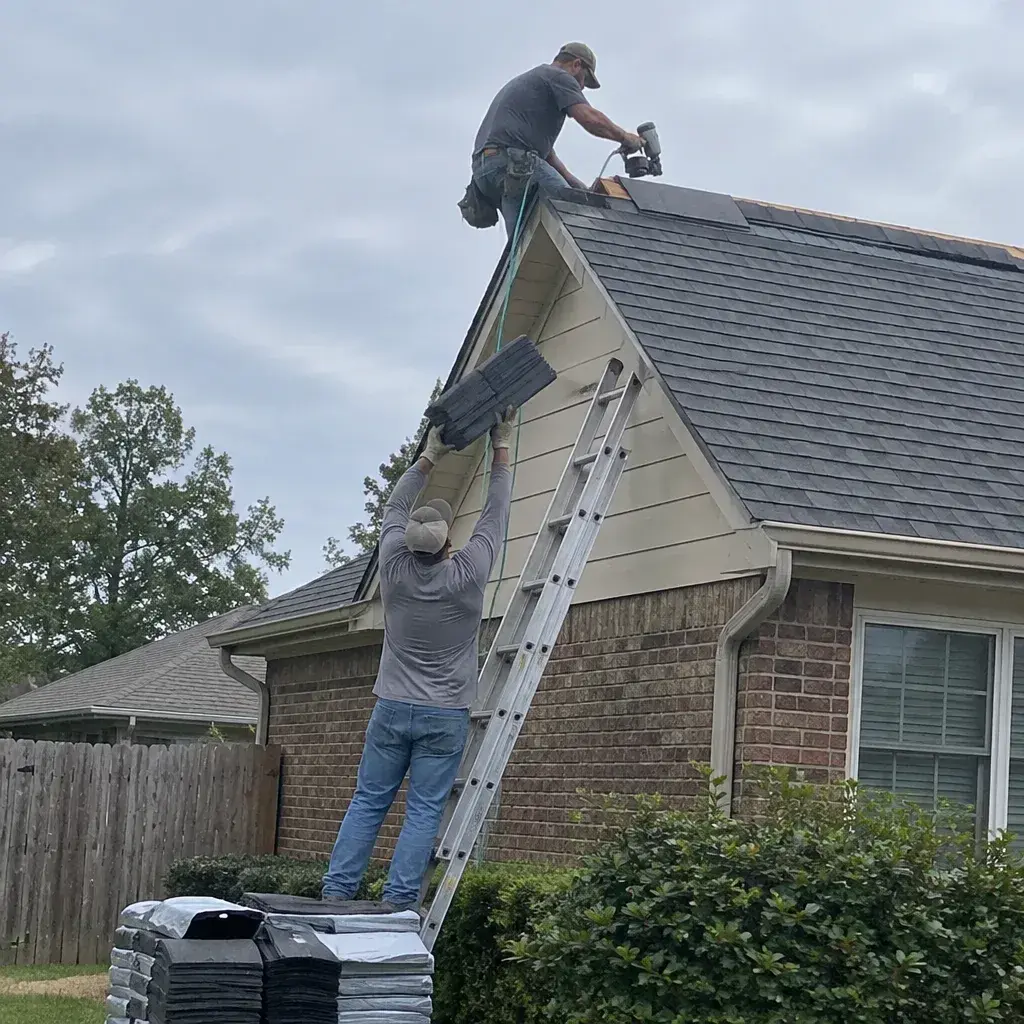
The roofer identifies the cap type, checks its overlap, fasteners, and bedding, and looks for damage at the ridge beneath. They remove failed sections, replace cracked or missing caps, then secure the run so adjoining pieces shed water. If a ridge vent is present, they determine whether the cap or vent component is the source.

After identifying the affected section, the roofer removes failed caps and checks the exposed ridge for moisture or deterioration. Sound pieces may be reseated and secured; cracked or absent pieces are replaced with compatible material. The roofer checks the finished overlaps and explains whether the damage calls for work beyond that section.

When the inspection points to one reachable roof component and nearby materials are dry, the roofer may be able to correct it on that appointment. Further service is justified when water returns, more than one area is affected, or the route into the house still needs tracing.

WHAT ROOF CONDITION MEANS FOR THE NEXT STEP
Roof Components Limited-Area Work
A narrow roof issue traced indoorsMaterial matching
Ceiling marks return after roof repairRoof drainage paths
Separate leak points without a clear sourceJunction guards and shingle rows repaired

Choosing When a Roofer Should Take Over

From a window or the ground, photograph any cap pieces that appear absent or out of line, and note when indoor marks first appear or change. Keep the pictures for the roofer. Do not pull at caps, apply sealant, or step onto the roof; those actions can hide the entry point or create a fall risk.

Choosing the Right Roof Leak Repair

An open ridge joint can let repeated rain wet the roof structure, and the delay between entry and visible damage can make the affected area larger. If an indoor ceiling begins to bulge, soften, or shed material, keep people out from beneath it and contact a roofer. Move valuables only when the floor and route are safe; contain drips without touching ceiling material.

How Does Repair Scope Shape Roof Leak Costs?

Request an itemized outline after the assessment so you can review how the proposed tasks and the condition of the roof factor into the quote.The guide range reflects a roof repair approach supported by inspection findings; it does not price every possible method for addressing the same leak. The amount of repair work depends on what the inspection finds around the leak.See what can shift a repair estimate in the pricing guide, and how an inspection informs next steps through Shingle Leak Repair.
REPAIR METHODS

Temporary Measures While Roof Repairs Wait

Common Leak Concerns

Leak Repair FAQs

What signs suggest a ridge cap may be damaged?

A roofer checks whether ridge-cap pieces still overlap and whether their fasteners or bedding have loosened, then looks for openings that could admit rain. Sound caps may be reset and secured with suitable fasteners; split or missing pieces are replaced, with the underlying ridge checked for damage. If the roof has a ridge vent, the roofer distinguishes cap movement from a vent issue. Arrange an inspection promptly when caps are open, especially after rain.

What can make a ridge cap loosen or lift?

Fasteners can loosen, or the bedding that supports a cap can deteriorate, allowing a piece to move out of position. Once an edge lifts, rain can get beneath the overlap; repeated movement may widen a crack or leave a gap. Wind exposure varies with roof shape and surroundings. A roofer checks how the cap is held and whether the material beneath it remains sound.

How are cracked or missing ridge cap pieces repaired?

The roofer removes cap pieces that are split or gone and checks the ridge beneath for damp or damaged material. If a cap is sound but has shifted, it may be reseated and secured with suitable fasteners. Damaged pieces are replaced with compatible ridge material, then the roofer checks the joins along the repaired section. The work depends on how far water has reached.

Can a damaged ridge cap let water reach the ceiling?

A ridge cap is the roof’s solid peak covering, often made of overlapping pieces; a ridge vent is an airflow assembly at that same location. From the ground, note whether you see separate cap pieces or a continuous raised unit, but appearance may not settle the question. Gaps or uneven seams between cap pieces may be another clue, though a closer inspection is needed to identify the component.

Start an Inquiry

Not sure how far the leak has spread?

Take photos of any staining, bubbling paint, or peeling finish, and keep them ready to review during the inspection. Before picking a visit time, confirm whether the inspection has a charge. Ask them to put their observations and the repair work they recommend in writing.

Call (855) 768-9249
Confirm availability, inspection charges, and written scope
Call (855) 768-9249 Schedule Online