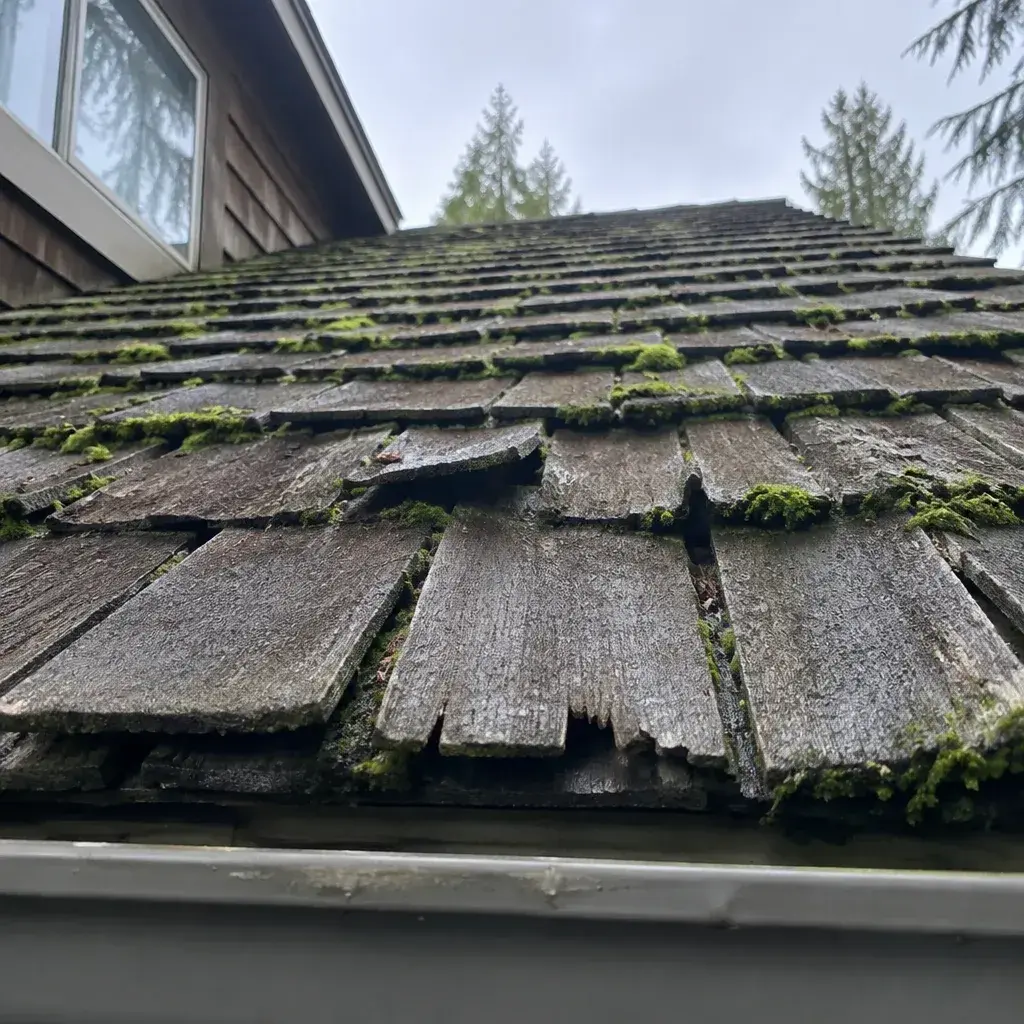
Roof Materials That Need Attention
Leak patterns and roof age can help clarify which findings support the proposed repair. Similar-looking damage can therefore call for different scopes: an isolated failed shake may need limited work, while wider wear or affected underlayment can change what the repair must address.
On ranches, split-levels, and subdivision homes, roof pitch, nearby trees, and exposure differ from house to house. Those conditions affect how shakes weather and how water reaches roof details, so the proposed repair scope should follow the inspected roof’s condition.
Dedicated pages describe specific places, and requests from other areas enter the same referral path. The city and county help identify where a call comes from; the pros we connect you with can confirm whether their service area includes the property.
Choosing a Roof Leak Repair
- SHAKE DAMAGE
- A shake split can expose underlayment, while softened wood below may show that the repair needs to reach deeper than the roof surface.
- REPAIR SCOPE
- Replacing a single shake can preserve sound surrounding material when the neighboring pieces and lower layers remain in usable condition.
- FLASHING
- Flashing carries water past roof joints; movement, corrosion, or a failed overlap can interrupt that route and admit moisture.
- ROOF LAYERS
- Photos of interior marks and visible shake damage can help document what the roofer inspected and what the repair addresses.
- NEXT STEP
- Watch for dark streaks, soft spots, or peeling paint near the leak, which can point to moisture traveling beyond the roof’s visible damage.
- Visit Timing
- Rain can reveal an opening in a shake course or flashing joint; dry periods may leave water damage less apparent. Heat and changing moisture affect wood over time, so inspection findings should guide whether the repair can stay localized.
- FOLLOW-UP
- an estimated $90–$350
Attic Signs That Point Toward Water
Wood shake maintenance. Maintenance focuses on preserving sound shakes and noticing weathering before a leak is confirmed. Compare the proposed task with the reported leak. Routine care addresses weathering across shakes that may still shed water; leak repair should connect inspection evidence to a suspected entry point and specify which pieces, flashing, or lower layers need work.
Roof Leak Repair to Limit Interior Damage
The roofer reviews the indoor leak pattern and attic evidence, then examines shake courses and nearby flashing. This helps identify whether water is passing a damaged piece, a roof transition, or a lower layer, and whether a limited repair fits the roof’s condition.
For a localized defect, the roofer removes compromised shakes and inspects the exposed underlayment and wood. Sound layers may allow a replacement shake; deteriorated material expands the work. Failed flashing is reset or replaced as needed, with adjacent surfaces checked for a continuous water-shedding path.
A repair can often be handled in one call if the source is clear and the affected roof section is accessible. If attic evidence shows moisture in separate areas, or the first correction does not stop water entry, arrange another assessment before considering recurring service.
HOW INSPECTION FINDINGS GUIDE REPAIR OR MONITORING
| Roof Components |
Limited-Area Work |
|---|
| A narrow roof issue traced indoors | Material matching |
| Ceiling marks return after roof repair | Roof drainage paths |
| Separate leak points without a clear source | Junction guards and shingle rows repaired |
LEAK TRACE CLUESRequirements for roof work depend on the property’s jurisdiction. Ask whether local approval applies and have the invoice identify the inspected areas, materials replaced, and any concealed damage found. This national page does not establish a state license or a local code requirement.
Setting the Scope for Leak Repairs
Rain entering through a split shake or open flashing joint can keep underlayment and roof wood damp. Ongoing moisture may soften the wood, wet insulation, and damage interior finishes. A ceiling stain may show only where water became visible, not the full extent of damp materials.
Choosing When a Roofer Should Take Over
From inside, place a container under active drips, move belongings, and photograph ceiling changes. You can record where the stain appears and when it worsens, then share the roof age if known. Keep photos tied to the dates of rain so changes in the ceiling are easier to compare.
Roof Leak Risks Beyond the Visible Stain
A continuing leak can wet roof wood, insulation, and ceiling materials even when the drip pauses. Keep people clear of a sagging or bulging ceiling, and treat water near electrical fixtures as an urgent hazard. Catch drips and move belongings from indoors. Moisture can reach insulation and ceiling materials even when no water is visibly dripping.
What Can Change a Roof Leak Repair Quote?
Ask the pros we connect you with to inspect the roof, then discuss how the affected materials and repair scope shape the estimate.The guide range reflects a roof repair approach supported by inspection findings; it does not price every possible method for addressing the same leak. The amount of repair work depends on what the inspection finds around the leak.Use Leak Inspection to follow the path from roof inspection to repair choices; pricing guide explains which job details affect cost.