Following Water Through the House
Small differences in piece shape can affect how a repair blends into the surrounding roof. A repair method that suits one product may not suit another, so the installed material and the roof condition need to guide the work.
This page addresses synthetic roof leak repair nationally. Some places have their own service pages; elsewhere, the pros we connect you with serve through the same referral. Check the location pages for their coverage details, since this page does not establish service at a specific address.
Dedicated pages describe specific places, and requests from other areas enter the same referral path. The city and county help identify where a call comes from; the pros we connect you with can confirm whether their service area includes the property.
Choosing a Roof Leak Repair
- PRODUCT ID
- Synthetic shake and slate are manufactured in product-specific profiles; a close visual match does not guarantee a compatible replacement.
- UNIT CONDITION
- Fastener placement affects how synthetic units stay secured and preserve the intended overlap between courses.
- ATTACHMENT
- A roof junction can leak beside intact synthetic pieces, so flashing may need a separate repair scope.
- ROOF JUNCTIONS
- Unavailable matching units or widespread deterioration can make a limited repair unsuitable.
- REPAIR LIMITS
- A spot repair can preserve sound courses when matching units are available; widespread brittleness or discontinued profiles can make a patch unreliable.
- Contact Route
- Heat, cold, rain, and snow affect roofs differently by region and season. Weather can change roof access and expose an existing weakness; after conditions allow safe inspection, have a roofer check whether synthetic units or their attachments have shifted.
- MATERIALS
- an estimated $90–$350
Attic Signs That Point Toward Water
Natural slate roof repair. The visible pattern alone may not reveal how the roofing is assembled. Their replacement pieces and installation methods are not interchangeable. Check installation paperwork, product packaging, or readable manufacturer markings on an accessible piece. The product name and profile can help distinguish a synthetic covering from stone slate; a roofer can confirm the material without relying on appearance from the ground.
What Guides a Roof Leak Repair Plan
The roofer reviews the leak history, accessible attic evidence, and roof surface, then identifies the synthetic product from records or markings. They inspect damaged units, attachment points, overlaps, and nearby flashing to determine whether the leak involves the covering, a junction, or both.
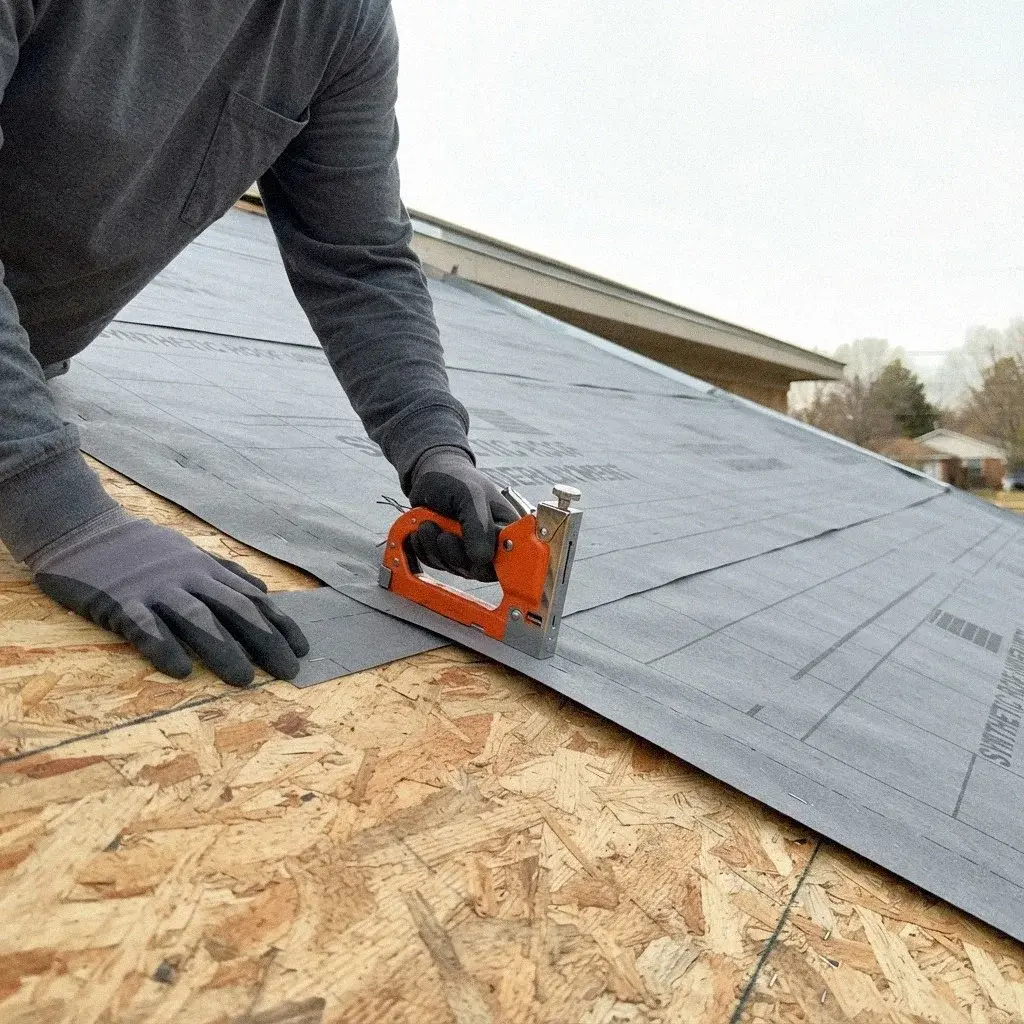
For a suitable localized repair, the roofer carefully removes or lifts affected pieces, checks the layers below, and installs compatible units with the product’s specified fastening method. They address any separate flashing defect and explain when unavailable parts or broader deterioration make a small repair a poor fit.
When the inspection points to one reachable roof component and nearby materials are dry, the roofer may be able to correct it on that appointment. Further service is justified when water returns, more than one area is affected, or the route into the house still needs tracing.
WHEN ROOF EVIDENCE SUPPORTS WORK OR ANOTHER CHECK
| Interior Impact |
Leak-Source Fix |
|---|
| One entry point found before broader damage | Interior protection |
| New drips follow completed leak work | Flashing condition |
| Water emerging across distinct roof zones | Roof opening seals and shingle layers reset |
JOINT AND SEAM CHECKRoofing requirements vary by address, and this national page does not establish which rules apply to your home. Ask the pros we connect you with to identify applicable local requirements and itemize the product, affected area, materials, and work performed on the invoice.
Inspection Clues Across Roof Materials
A failed unit or roof joint can admit repeated rain beneath the synthetic covering. Moisture may then dampen underlayment, decking, insulation, or interior finishes; prolonged wetting can require drying or removal of affected materials as well as roof work. The extent depends on how far water has spread and what inspection finds.
Containing Water While You Arrange Repair
Look for the product name on an invoice, packaging, or leftover-material label, and share it with the roofer. Do not pry up a unit or test a fastener: synthetic profiles and attachment details vary. If your records do not identify the system, leave product identification and repair selection to an independent roofer.
Roof Leak Risks Beyond the Visible Stain
A leak is mainly a property concern; inspecting the roof brings a separate fall risk. A ceiling stain can show where a leak became visible, not where it began. If those details cannot be checked safely, a proposed repair may miss a loose unit or a gap at a transition. Ask what was inspected before work is chosen.
How Does Repair Scope Shape Roof Leak Costs?
Request an itemized outline after the assessment so you can review how the proposed tasks and the condition of the roof factor into the quote.The guide range reflects a roof repair approach supported by inspection findings; it does not price every possible method for addressing the same leak. The amount of repair work depends on what the inspection finds around the leak.Review pricing guide for estimate drivers, then visit Leak Inspection to see how roof evidence guides a repair plan.