Wind Direction in Roof Leak Repair
Start with the storm pattern: a wind driven roof leak can appear when gusts carry rain across the roof instead of letting it fall onto the surface as expected. The leak may stop when the gusts ease, even though the roof opening remains. That can expose a gap that stays dry in calmer weather. The direction of the gust helps narrow which roof sections and nearby joints deserve attention first.
Write down which way the wind was coming from, when you first noticed water, and where it showed up inside. Compare that note with the roof sides facing the storm, but do not climb up to check them. On a ranch or split-level, the leak may show near a ceiling edge even when the likely entry is higher on a different roof plane. Avoid opening the ceiling to follow the leak; leave tracing to the inspection.
Roof Leak Repair Across Roof Areas
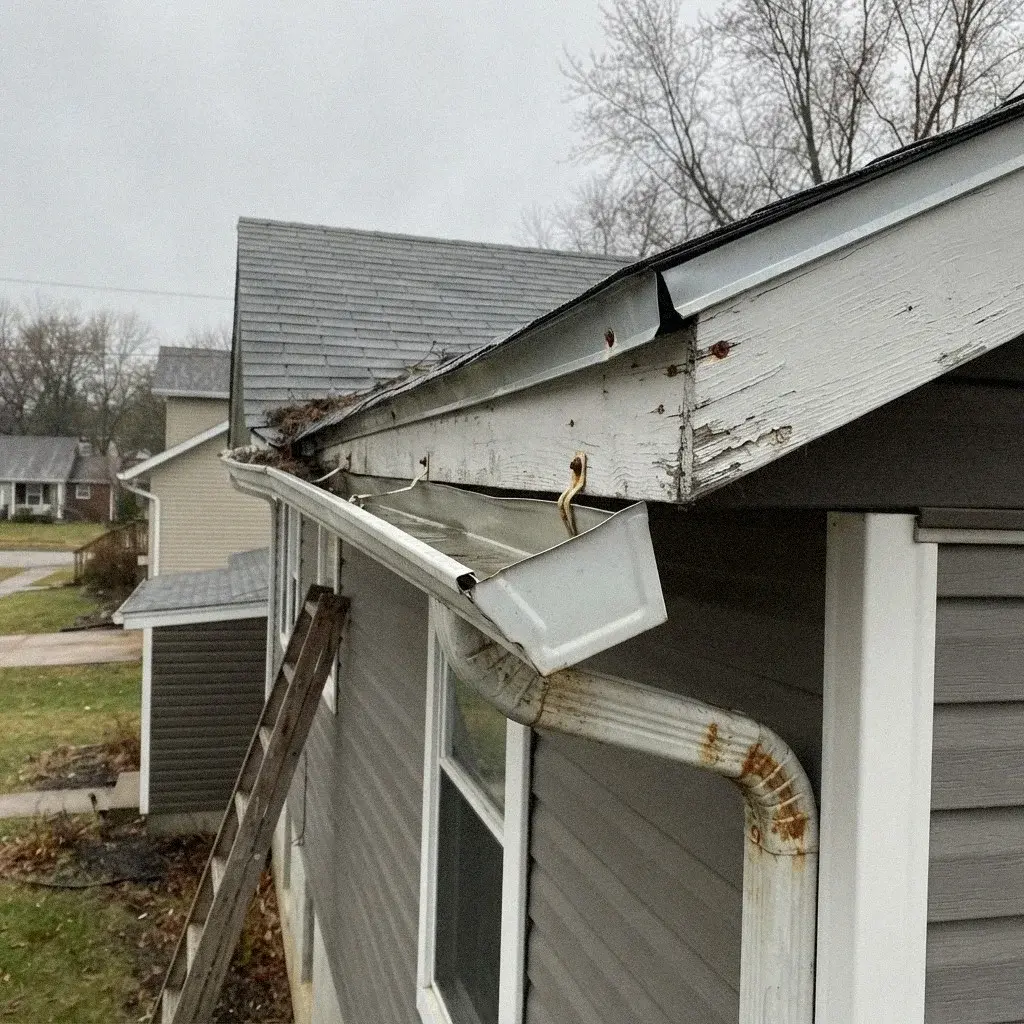
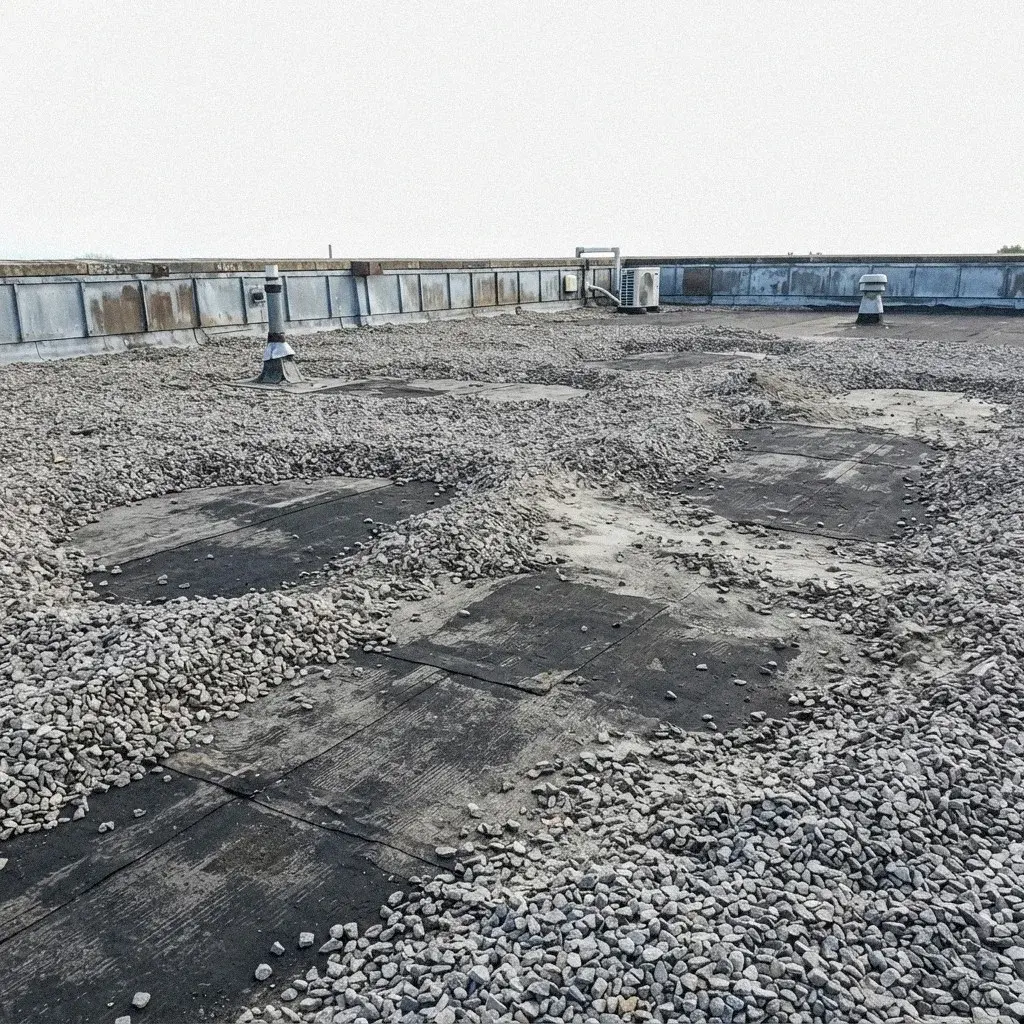
A roof leak inspection can follow the storm-facing slope and check how its parts meet. Shingles may lift or lose their hold at an edge; valleys channel runoff; vent boots surround pipes; and seams join sections of some flat roofs. Wind can press rain against these areas from a direction they do not shed as readily. The inspection can also note whether the roof surface directs runoff toward the suspected opening.
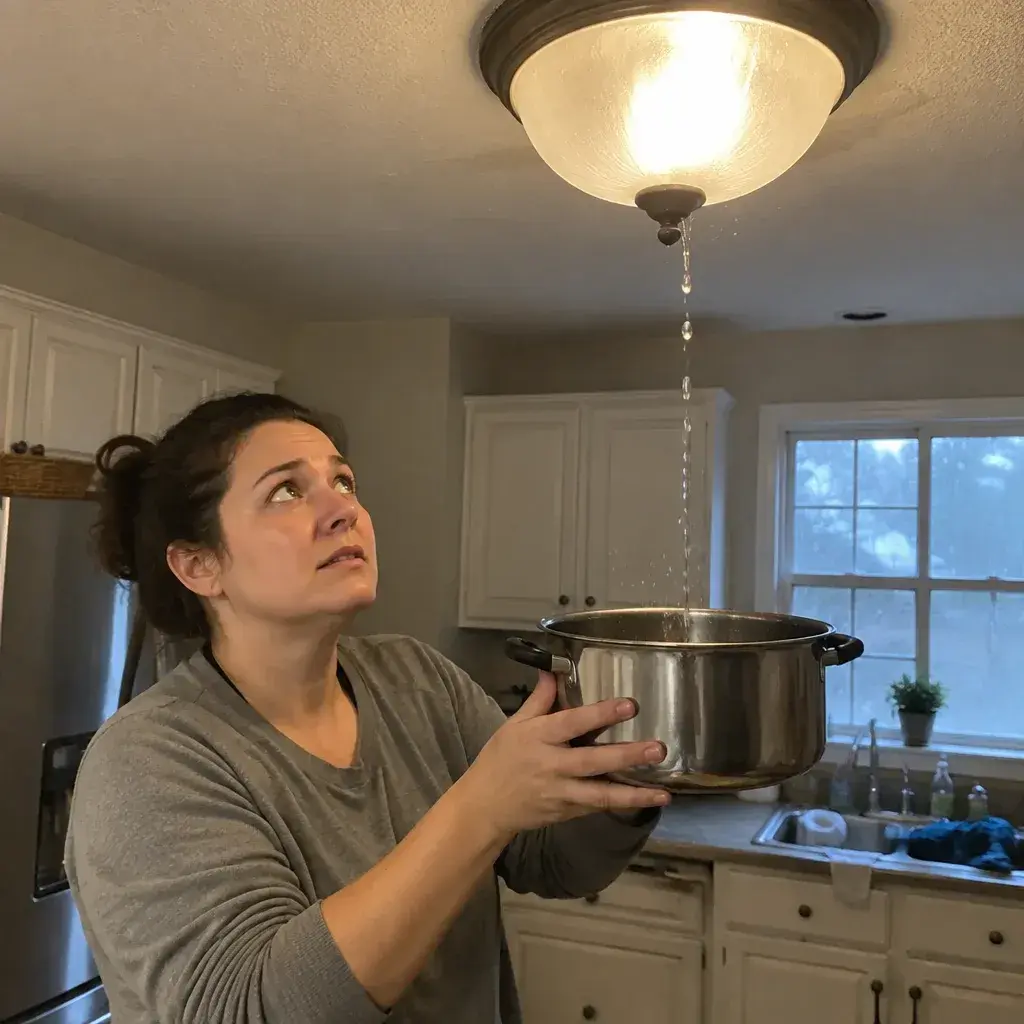
The indoor drip does not necessarily mark the entry above it. Water can spread across the ceiling surface before a stain becomes visible. Attic evidence may help trace that route: a damp board or a wet rafter can point toward a different section than the visible stain. A roofer can compare those signs with the exterior surface before proposing a repair.
Roof Leak Repair Clues to Record
From the ground, note visible changes such as a shingle that sits out of line, a missing patch of roof covering, or damage around a vent. A photo from a safe spot can preserve what you saw after the storm for the inspection. Do not treat one surface mark as proof of the entry point: the wind may have driven rain into another area, and the interior route can obscure where it started.
Indoors, record the stain’s position, whether water is still dripping, and when the mark appeared in relation to the gusts. Check whether nearby walls or trim are damp too, and include those observations in your notes. If the mark grows after the storm passes, add that change to your notes. The timing and progression help explain how the water reached the room.
Roof Leak Repair After Wind-Driven Rain
Keep the notes and photos together so the roof inspection can compare indoor signs with visible roof conditions. A written report can describe what the roofer found and which components need attention. The report can also note whether the leak was active during inspection or left visible evidence.
Gusts can press rain against roof surfaces from an angle normal runoff does not follow, exposing a weak shingle edge, valley, vent boot, or roof seam. A wind driven roof leak may ease when the wind shifts, although the entry point can still admit water later. Note the wind direction, where water appeared indoors, and when the leak began; share those details when arranging an inspection with the pros we connect you with. Photograph visible damage and indoor stains, and contain drips inside. Local pages name their covered places; elsewhere, the same referral reaches the pros we connect you with.
Dealing with a roof leak at your home?
Start by noting where the ceiling stain or bubbling paint appears. Look for peeling paint or a soft patch around the stain, not just a change in color. Moisture may also affect insulation or wood above the ceiling. Call (855) 768-9249 with your address to ask whether they serve it, when they may visit, and whether a visit charge applies. Ask what roof or attic findings point to the proposed repair, and which affected component the work would address.